Alcohol Addiction: Signs, Symptoms, Risks, and Treatment







What you will learn
- Alcoholism, or alcohol use disorder (AUD), refers to a pattern of alcohol use that can’t be controlled.
- Alcohol abuse and dependence fall under the umbrella of AUD.
- The DSM-5 categorizes AUD from mild and severe based on the criteria.
- AUD carries serious risks, including health problems and injuries or death from actions under the influence.
- AUD can’t be cured, but it can be treated.
“Alcoholism” has been a widely used term to refer to someone with heavy alcohol use. Like other outdated terms to refer to substance use, this term fell out of favor because of its heavy stigma.
Mental health professionals have replaced terms like “alcoholism” and “alcoholic” with “alcohol use disorder” (AUD), which can range from mild to severe and encompasses conditions previously referred to separately as alcohol abuse and alcohol dependence.
What Is Alcoholism or Alcohol Use Disorder?
Alcoholism, or AUD, is a pattern of alcohol use behavior that the person can’t control.[1] During its use, alcoholism wasn’t a clearly defined condition, but the shift to AUD and alcohol dependence are effective in describing unhealthy alcohol use that’s mild, moderate, or severe.
Alcohol use disorder is a type of substance use disorder that’s characterized by an impaired ability to control or stop alcohol use despite adverse effects regarding mental or physical health, interpersonal relationships, or work and personal life. You may also hear about an alcohol use disorder called “alcohol addiction.”
As defined by the National Institute on Alcohol Abuse and Alcoholism (NIAAA), AUD is “an impaired ability to stop or control alcohol use despite adverse social, occupational, or health consequences.”[2]
The Diagnostic and Statistical Manual of Mental Disorders, Fifth Edition (DSM-5), replaces the categories of alcohol abuse and alcohol dependence, which were distinct in the DSM-IV, with the unified category of alcohol use disorder (AUD) with varying levels of severity.[3]
Overall, alcohol abuse is a pattern of alcohol use with significant possible effects, such as problems with interpersonal relationships, issues at work or school, legal problems, or significant health problems.
When people have little control over their alcohol use, despite efforts to cut back or stop, it’s considered alcohol dependence. These people will often have withdrawal symptoms if they stop drinking, increased tolerance that requires more and more alcohol to achieve the same effects, and an inability to control their drinking once they start.
How Common is Alcohol Addiction?
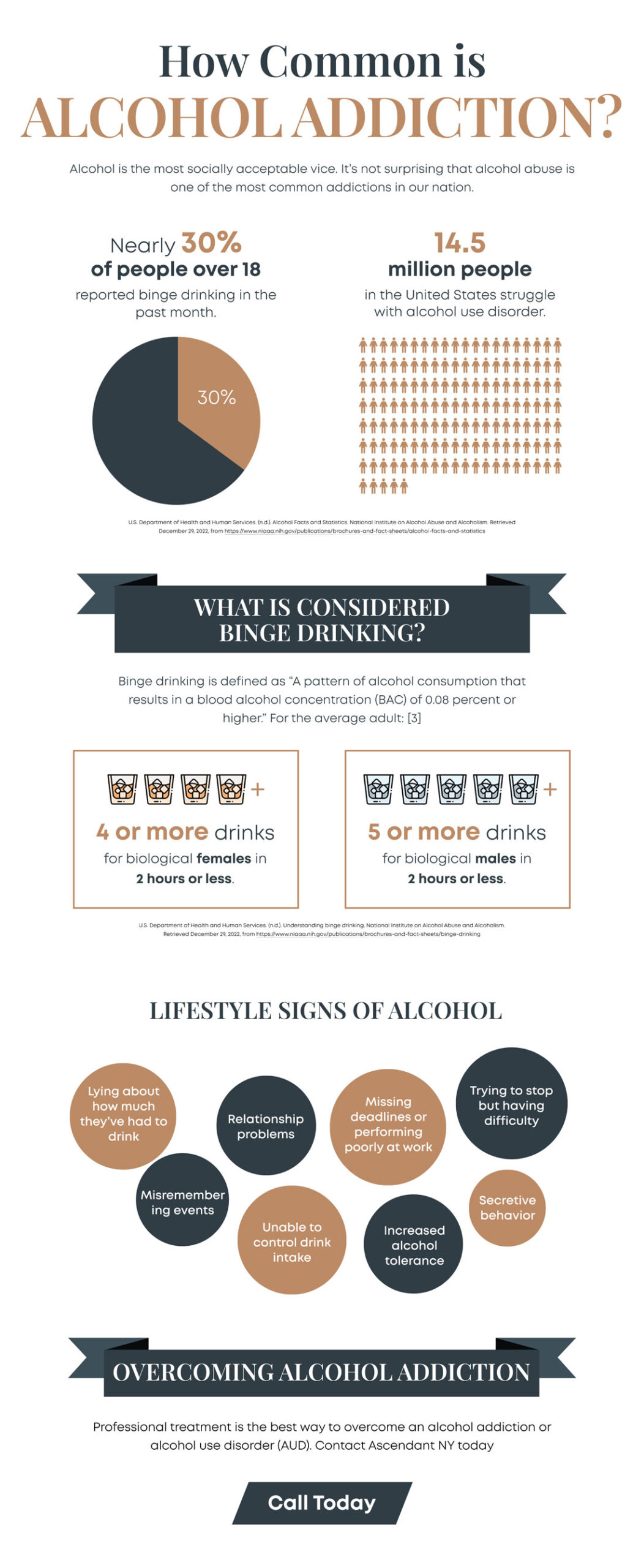
Alcohol is one of the most common addictions because of its availability and social status attached to the substance.
According to the 2019 National Survey on Drug Use, nearly 30% of people over 18 reported binge drinking in the past month. In addition, the same survey calculated that 14.5 million people in the United States alone are struggling with alcohol use disorder.
What Are the Signs and Symptoms of Alcohol Addiction?
Like other substance use disorders, AUD can range in severity, but it always worsens over time. Based on the diagnostic criteria, the symptoms of AUD may include:[4]
- Trying to control alcohol use but not being able to
- Feeling intense cravings for alcohol
- Devoting a lot of time to obtaining, using, and recovering from alcohol
- Stopping other activities and hobbies by using alcohol
- Being unable to stop using alcohol despite health, occupational, social, or legal problems
- Increasingly reckless behaviors like driving under the influence
- Experiencing withdrawal symptoms like shaking or nausea after alcohol wears off
- Insisting on “just one more drink”
Is Being Drunk a Sign of Alcohol Addiction?
Not necessarily. An individual partaking in excessive amounts on a single occasion can exhibit signs of drunkenness however this does not always indicate an addiction or dependence.[5]
These symptoms showcase a visible manifestation of alcohol use and can vary from person to person.
- Redness in the face: There are numerous cosmetic indicators of excessive alcohol use, such as swollen blood vessels that cause facial redness. Long-term over dilation of these arteries can result in spider veins on the skin.
- Disheveled Appearance: Dehydration and sleep deprivation, frequently linked to heavy alcohol use, can result in dull skin and sleepy eyes. They may still smell like alcohol from the night before.
- Uncoordinated Movements: Under the influence of alcohol, the brain area that regulates balance and coordination may become less effective. Even while sober, this increases the danger of slips, trips, and accidents.
What Is a “High-Functioning Alcoholic?”
High-functioning alcoholics who are not officially recognized as such by a doctor do not have the typical traits of someone dealing with an alcohol use disorder.
High-functioning alcoholics can prevent their alcoholism from interfering with their commitments in the workplace. Although they may seem to have their life together, they probably struggle with strong alcohol cravings and have made numerous failed attempts to give up drinking.
Lawyers, doctors, and professors are careers with many “high-functioning alcoholics.”
Unhealthy Alcohol Use vs. Alcohol Addiction and Dependence
Unhealthy alcohol use is different from alcohol dependence. People who have unhealthy alcohol use patterns are not always physically or psychologically dependent on alcohol, but they’re still putting their health and safety at risk by consuming alcohol in ways it isn’t intended, such as combining alcohol with certain medications.
One of the most common forms of unhealthy alcohol use is binge drinking, a pattern of consuming a lot of alcohol within a short period of time.[6] This behavior is normalized among young people but can lead to serious risks and problems.[7]
What is binge drinking? For men, consuming five or more drinks within two hours is binge drinking, while for women, consuming four drinks within two hours is binge drinking. For many, binge drinking is considered normal and accepted, not “problem drinking,” because it often occurs in certain social situations.
Most people who binge drink are younger adults between the ages of 18 and 34. Despite being only one form of unhealthy drinking, it accounts for nearly all excessive drinking.[8]
Conversely, someone with AUD may not binge drink – or drink excessively within a short period – despite being dependent on alcohol otherwise.
Binge drinking may not be a use disorder or addiction, but it has its own risks and side effects, such as:
- Sudden infant death syndrome
- Violent acts that occur under the influence, such as intimate partner violence, homicide, suicide, or sexual assault
- Injuries from falls or car accidents while under the influence
- Sexually transmitted diseases
- Alcohol poisoning
- Increased risk of certain cancers
- Chronic illnesses like heart disease or liver disease
- Short- or long-term learning and memory problems
Other unhealthy alcohol use may involve combining alcohol with other substances when it is not safe to do so.
Can Drinking Too Much Alcohol Kill You?
Too much alcohol too quickly can lead to alcohol poisoning and have deadly consequences. Alcohol poisoning is a serious and occasionally fatal side effect of alcohol binging. Excessive alcohol consumption can cause problems with your breathing, heart rate, body temperature, gag reflex, and possibly a coma and even death.
In other cases, mixing alcohol with medicines may also have lethal consequences. When certain drugs are taken with alcohol, these side effects can include headaches, dizziness, fainting, and loss of coordination. Additionally, it can increase your risk of experiencing internal bleeding, cardiac issues, and breathing difficulties.
Alcohol Intoxication and Withdrawal
People with AUD experience both alcohol intoxication and withdrawal.
Intoxication occurs when the amount of alcohol in the bloodstream increases, making the person drunk. As concentration increases, people begin to experience more obvious signs of intoxication, like poor judgment, slurred speech, memory or focus issues, poor coordination and motor function, and reckless or inappropriate behavior.
When the intoxication becomes severe, the person may have blackouts or periods they don’t remember. If blood alcohol concentration becomes excessively high, it can lead to coma, permanent brain damage, or death.
Alcohol withdrawal occurs when the effects of alcohol wear off. This can take a few hours to a few days and may include symptoms like nausea, vomiting, stomach upset, rapid heartbeat, insomnia, sweating, tremors, hallucinations, and anxiety. In some cases, seizures may occur.
Despite common misconceptions, a hangover and alcohol withdrawal are distinct conditions; withdrawal symptoms occur with dependency and repeated heavy use, whereas a hangover can occur after any single drinking session. Someone can have a hangover after just one time using alcohol because it depends on many different factors. Withdrawal occurs after using alcohol multiple times.
What Is Healthy Alcohol Use?
Based on the 2020-2025 Dietary Guidelines for Americans, adults of legal drinking age can engage in healthy alcohol use by limiting consumption to two alcoholic drinks a day for men and one alcoholic drink a day for women.[9]
What is Considered 1 Drink?
While the specifications for what is considered a single drink may vary from country to country, in the United States, one drink contains roughly 14g of pure alcohol, which is about 5%. [10]
| One Drink | Alcohol Content |
| One Beer (12 oz) | 5% – 8% |
| One glass of Wine (5 oz) | 12% – 15% |
| One shot of liquor (1.5 oz) | ~ 40% |
How Is AUD Diagnosed?
An AUD diagnosis relies on the criteria in the DSM-5 for alcohol use disorder. A diagnosis is made when an individual meets at least two of the specified criteria within a 12-month period:[11]
- Alcohol tolerance
- Withdrawal symptoms like nausea, insomnia, or tremors
- Drinking more than intended
- Attempting to stop or reduce alcohol use unsuccessfully
- Spending a lot of time getting, using, or recovering from alcohol
- Withdrawing from social situations or work activities
- Inability to stop using alcohol, despite related problems
What Are the Health Effects of Alcohol Addiction?
Alcohol use can cause both short-term and long-term adverse effects.
Some of the short-term effects of alcohol may include poor judgment and reckless behaviors that can lead to injuries or death, such as driving under the influence or venturing into dangerous situations.
When alcohol use continues, it can have significant effects on physical and mental health, such as:
- Memory loss
- Poor concentration
- Fatigue
- Eye weakness
- Heart failure, stroke, or cardiomyopathy
- High blood pressure
- Diabetes
- Sexual dysfunction
- If alcohol is used during pregnancy, fetal alcohol syndrome
- Menstrual problems
- Nervous system problems
- Bone loss
- Liver diseases like cirrhosis
- Gastrointestinal conditions and malnutrition
How Is AUD Treated?
AUD can be treated effectively, but one of the challenges is that it’s socially accepted. People with AUD may rationalize their drinking by comparing themselves to others who appear to drink without consequences, potentially leading to denial about the severity of their own drinking problem.
Once AUD is acknowledged and diagnosed, treatment can begin. AUD treatment is tailored to the needs of the individual so that it could include techniques like inpatient treatment, intensive outpatient treatment, support groups, and group or individual therapy.
Often, AUD treatment is a combination of traditional methods like 12-step programs and innovative therapies like behavioral therapy. Individual talk therapy and group therapy or support groups are included in many cases.
Severe AUD may necessitate medically supervised detox due to the risks associated with alcohol withdrawal, which can include severe symptoms. Treatment may involve medications like disulfiram, which inhibits the enzyme involved in metabolizing alcohol, causing unpleasant symptoms when alcohol is consumed, to discourage drinking.
What Do You Do if You’re Showing Signs of Alcoholism?
If you’re showing signs of alcoholism, know that you aren’t alone, and there are ways to recover and regain control of your life. The first step is to admit you have a problem and enter treatment. Drop into an AA meeting and look into alcohol rehab options.
Start Your Recovery with Treatment for AUD
People who display unhealthy drinking patterns are no longer referred to as “alcoholics” or people who have “alcoholism,” but that doesn’t mean the condition has disappeared. AUD is still a risk for people who can’t control their alcohol use and can lead to serious problems with home, school, work, relationships, or mental and physical health. If you or a loved one are looking for an alcohol rehab in NYC, contact Ascendant New York today. Our caring & compassionate admissions team is standing by to help you start your recovery journey.
Frequently Asked Questions About Alcohol Addiction
AUD has criteria for mild, moderate, and severe use patterns. Proper diagnosis is necessary for appropriate treatment plans.
While there is no cure for AUD, effective management through ongoing treatment can help individuals achieve and maintain recovery, leading to a healthier life.
Alcohol poisoning is a serious and potentially life-threatening result of drinking too much alcohol in a short period of time. This may happen with binge drinking, but the limits for each person can vary widely. Alcohol poisoning primarily results from consuming excessive amounts of ethanol, which is the type of alcohol found in alcoholic beverages.
Depending on your circumstances and insurance plans, insurance sometimes covers alcohol rehab. For a more definitive answer, read through your policy for specific answers to your questions and get in touch with an insurance rep if you have more. You can also reach out to our admissions team for a free, no obligation insurance verification.
Start Your Recovery
At Ascendant New York, our objective is your health and well-being. Through the provision of a comfortably luxurious atmosphere and the administration of tested and proved modalities, we work hard to ensure every patient’s physical, emotional, & psychological needs are met at every turn.
Ascendant New York Editorial Guidelines
Here at Ascendant New York, we understand the importance of having access to accurate medical information you can trust, especially when you or a loved one is suffering from addiction. Find out more on our policy.
[1,2] Understanding Alcohol Use Disorder | National Institute on Alcohol Abuse and Alcoholism (NIAAA). (n.d.). https://www.niaaa.nih.gov/publications/brochures-and-fact-sheets/understanding-alcohol-use-disorder
[3,4,11] Alcohol use Disorder: A comparison between DSM–IV and DSM–5 | National Institute on Alcohol Abuse and Alcoholism (NIAAA). (n.d.). https://www.niaaa.nih.gov/publications/brochures-and-fact-sheets/alcohol-use-disorder-comparison-between-dsm
[5] Intoxication. (2025, September 29). Cleveland Clinic. https://my.clevelandclinic.org/health/diseases/intoxication
[6,8] Facts about excessive drinking. (2024, October 7). Drink Less, Be Your Best. https://www.cdc.gov/drink-less-be-your-best/facts-about-excessive-drinking/index.html
[7] About underage drinking. (2025, January 14). Alcohol Use. https://www.cdc.gov/alcohol/underage-drinking/index.html
[9] About moderate alcohol use. (2025, January 14). Alcohol Use. https://www.cdc.gov/alcohol/about-alcohol-use/moderate-alcohol-use.html
[10] What is a standard drink? | National Institute on Alcohol Abuse and Alcoholism (NIAAA). (n.d.). https://www.niaaa.nih.gov/alcohols-effects-health/what-standard-drink